The Idea - Svelte 5 Deserves a Data Grid Built for It
After Svelte 5 shipped, we surveyed the Svelte data-grid landscape and found ports and adapters, but nothing native to runes. So we decided to build one.
Once Svelte 5 shipped with its signal-based reactivity, the question for us was what it meant for data grids. The answer came from looking hard at what already existed, finding a real gap, and deciding to fill it.
We surveyed the landscape first
Before building anything, you should check whether you need to. So we went looking for the data grid a Svelte 5 developer would reach for. What we found fell into three buckets:
- Framework-agnostic engines with a Svelte adapter. Excellent data pipelines, but bridged to Svelte through stores and
.subscribewrappers - a translation layer between the engine's reactivity and Svelte's. - Headless table libraries. Great logic, no rendering, and largely written for the Svelte 4 store model rather than runes.
- Ports of older grids. Capable, but carrying years of assumptions from the framework they were born in.
All of them work. None of them were written natively for Svelte 5 runes. There was no grid where state was just $state and derived rows were just $derived, end to end.
A gap is only worth filling if you can fill it well
Plenty of gaps in software exist because filling them is nobody's idea of a good time. A data grid is exactly that kind of gap: virtualization, accessibility, keyboard navigation, editing, filtering, grouping - the unglamorous, easy-to-get-wrong work that makes naive in-house tables fall over.
But it happens to be the work we have done for over a decade. We built jqxGrid in 2011 and have maintained grids through every shift since - jQuery, web components, and the components on htmlelements.com used by thousands of teams at companies like Samsung, Boeing, NVIDIA, Microsoft, Nokia, and Intel. If anyone should build the native Svelte 5 grid, it is a team that has already built one for every era before it.
The shape of the decision
Once we decided to do it, the big choices came quickly, because the survey had already taught us what to avoid:
- Native runes, no adapter. The whole point. If we were going to wrap a foreign engine, there was no reason to start.
- Headless core plus a render component. A pure engine (
createSvGrid) for control, and a<SvGrid>component for speed - sharing one set of column definitions, so you never hit a wall. - MIT-licensed core. The grid most people need should be free for commercial use, the way the ecosystem expects.
- AI-native from the start. Assistants write a lot of grid code now. We wanted ours to be the one they get right - which later became the MCP server and
llms.txt.
Naming it
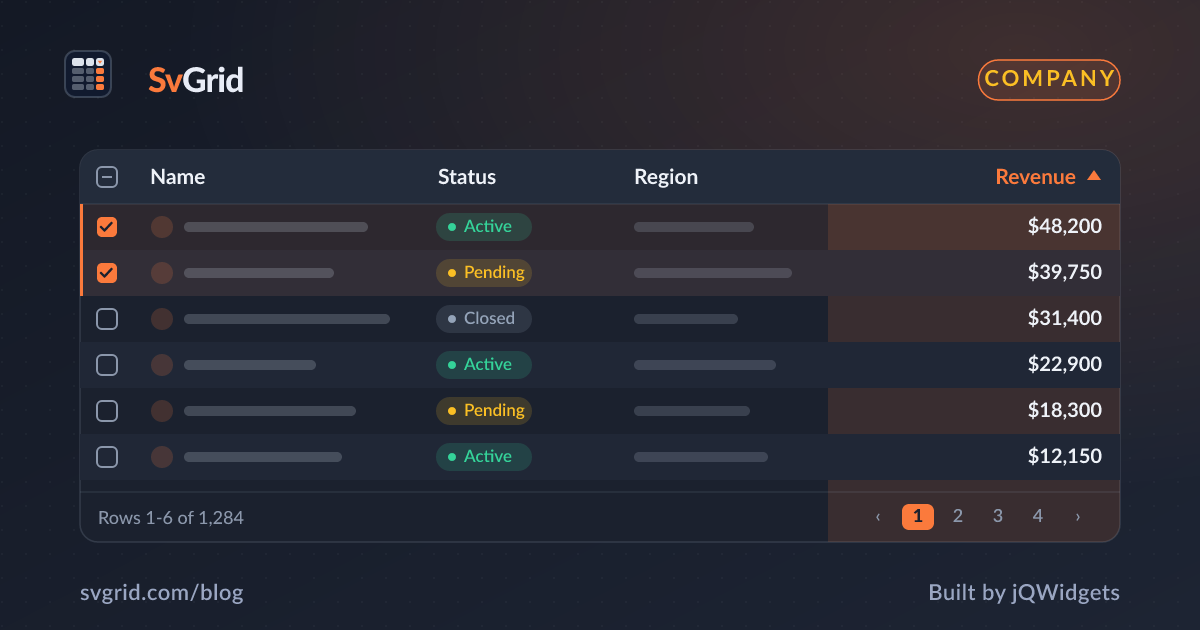
It needed a name that said what it was without ceremony. A Svelte grid. SvGrid. The mark became a tiny data grid with one sorted column - the most honest possible logo for the thing.
What comes next
A decision is not a product. Read next: how we started building SvGrid, and the first architectural calls that everything else rests on.
Frequently asked questions
Why build a new Svelte data grid instead of using an existing one?
When Svelte 5 shipped, the existing options were adapters, headless libraries built for the Svelte 4 store model, or ports of older grids. None were written natively for runes, so none avoided the translation layer a native grid removes.
Who decided to build SvGrid, and why are they qualified?
The jQWidgets team, which has shipped data grids since 2011 - jqxGrid and the Smart UI web components - across the jQuery, web-components, and now Svelte eras. Building a grid for a new framework is something they have done repeatedly.